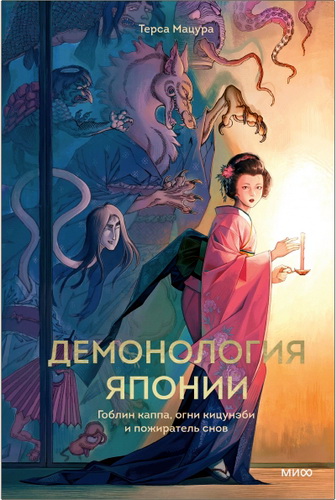
Smalley - The Revelation to John
Богословский клуб Эсхатос
Члены клуба имеют полный доступ к фондам клуба для личного ознакомления. Членство платное: для активации нужен вступительный взнос, условия — в правилах клуба.
Войти
Как вступить в клуб
Правила клуба
This commentary attempts to provide a careful exegesis of the Greek text of John’s Revelation, together with an interpretation which keeps in constant view the seer’s basic flow of theological thought. A detailed introduction to the Apocalypse already exists in the form of my earlier work, Thunder and Love (1994); and the magisterial commentaries by Aune (1997–98) and Beale (1999) include exhaustive surveys of all the major critical and hermeneutical issues involved in the scholarly investigation of this document. With such material as a presupposition, the following introduction accordingly does no more than set out some preliminary considerations which are basic to any study of Revelation, including the nature of the Greek text itself. Reference will also be made to the overarching approach adopted in the commentary, and to my own convictions about the origin, purpose and composition of John’s drama. Further support for these is provided in the comments themselves.
The stance adopted in this commentary is literary and theological, rather than simply critical and historical. The analytical work of earlier commentators, such as Peake (1919) and Charles, cannot be discarded; but recent research on the Apocalypse, represented for instance in the work of John Court (Revelation, 1994; ‘Reading the Book’ 164–67) and of Alan Garrow (Revelation, 1997), in the 2001 collection of essays edited by Steve Moyise (Studies in the Book of Revelation), and in my own monograph, Thunder and Love, is rightly sensitive also to the literary nature of John’s composition. The paragraphs which deal here with the Literary Setting and Theology of each section should therefore be regarded as of leading importance. For genre criticism of Revelation, given its amalgam of varied literary types, see further Court, Revelation 15–17. These forms include visions, epiphanies, auditions, discourses, dialogues and the use of formulae; see Aune lxxxii–lxxxiv.
In line with a such a narrative approach, the contents of Revelation are viewed in this commentary more from a synchronic than a diachronic perspective. That is to say, the Apocalypse is treated as a unity, and indeed as a coherent drama, even if it may be accepted that its author has drawn on earlier sources (as perhaps in Rev. 2—3; 7.1– 8), and engaged in some light editing of the text (see 11.1–3; 17.9–11). I find it difficult to respond positively to the radical rearrangement of the material in Revelation proposed by Charles, or to the elaborate source-critical theories which he constructs in order to amend a ‘depravation of the text’ (see esp. 1, l–lxv); and the suggestion of Aune (esp. cxviii–cxxxiv) that the Apocalypse came to birth in two major stages (‘first and second editions’) appears to be equally unnecessary. See also the summary of critical analyses, reaching back to work dating from the seventeenth century, in Swete (xlix–l) and Beckwith (224–39). It has to be said that hypotheses of this kind are notoriously subjective, and indeed speculative, and that they are by no means essential to a proper understanding of the text. At the same time, I am happier to argue for the basic unity of the Apocalypse (Smalley, Thunder and Love 97–101; see also Swete li–liv).
Stephen S. Smalley – The Revelation to John - A Commentary on the Greek Text of the Apocalypse
Downers Grove, IL: IVP Academic, 2005. – 653 p.
ISBN 0-8308-9396-6 (digital)
ISBN 0-8308-2924-8 (print)
Stephen S. Smalley – The Revelation to John - Contents
Foreword
Abbreviations
Introduction
THE REVELATION TO JOHN
Prologue: The Oracle Is Disclosed (1.1–8)
Act 1. CREATION, AND SALVATION THROUGH JUDGEMENT (1.9—11.19)
Scene 1: Seven Oracles (1.9—3.22)
Interval: Adoration in Heaven’s Court: God and His Christ (4.1—5.14)
Scene 2: Seven Seals (6.1–17)
Interval: The Church Protected (7.1–17)
Scene 3: Seven Trumpets (8.1—9.21)
Interval: God’s Sovereignty (10.1—11.19)
Act 2. SALVATION THROUGH JUDGEMENT, AND NEW CREATION (12.1—22.17)
Scene 4: Seven Signs (12.1—14.20)
Interval: A New Exodus (15.1–8)
Scene 5: Seven Bowls (16.1–21)
Interval: The Fall of Babylon (17.1—18.24)
Scene 6: Seven Visions (19.1—20.15)
Interval: Prelude to the Final Scene (21.1)
Scene 7: Seven Prophecies (21.2—22.17)
Epilogue: The Oracle Is Complete (22.18–21)
Bibliography
Indexes

Комментарии (1 комментарий)
Вельми дякую!